
Lynchburg Parole and Probation
Virginia gives the court, the Virginia Parole Board, and the Virginia Department of Corrections different duties. A Lynchburg court orders probation. It may be imposed instead of active confinement, after a jail term, or with a suspended part of a sentence. The Parole Board decides discretionary parole for a person who falls within a parole-eligible class. VADOC then computes the date, checks for legal barriers, carries out the release, and supervises both probationers and parolees through district offices.
Both statuses are forms of community supervision. That means the person can be physically free from a jail or prison while still bound by reporting rules and other written conditions. The distinction matters when reading a locator result. A District 13 placement is not a cell assignment. It is evidence of a supervision link. It does not establish the exact hour the person left the Lynchburg Adult Detention Center or a state prison.
| Point | Parole | Probation |
|---|---|---|
| Who authorizes it | Virginia Parole Board for an eligible sentence | The sentencing court |
| When it applies | Conditional service of the balance of an eligible prison sentence in the community | A court-ordered term that may replace or follow confinement |
| Local supervision | VADOC District 13 when Lynchburg is the assigned district | VADOC District 13 when assigned by the court and VADOC |
| Best proof | Parole decision, signed conditions, VADOC placement, and release documents | Sentencing order, signed conditions, and VADOC placement |
- Parole
- Conditional community service of part of an eligible sentence after release from confinement.
- Probation
- Court-ordered supervision that may stand in place of, or follow, active confinement.
- Supervisee
- A person monitored by VADOC in the community.
- Discharge
- The formal end of the applicable custody or supervision obligation, shown by agency or court records.
Verify Lynchburg Post-Release Supervision
Start with the VADOC Inmate and Supervisee Locator. It covers people in VADOC institutions, local or regional jails under VADOC authority, community corrections placements, and people supervised through probation and parole districts. The data update daily, but VADOC warns that a result may be inaccurate or out of date. Treat the locator as a strong lead, then confirm the status through the named office and the person’s papers.
- Search with the seven-digit DOC ID when known. Otherwise, enter at least the first three letters of the first name and the complete last name.
- Use optional filters only to separate plausible matches. Compare age, sex, location, and DOC number before relying on a result.
- Read the placement. A prison, a regional jail, a community corrections program, and District 13 describe different forms of control.
- If District 13 appears, call the office for current public instructions. Staff may lawfully limit person-specific details.
- Compare the locator with the sentencing order, Conditions of Probation, Conditions of Parole, or Order of Release.
- If no result appears after full discharge, ask VADOC about its inactive-record route instead of assuming no supervision history exists.
A Lynchburg person can leave state prison and remain searchable because parole or probation continues. In contrast, someone who has completed both custody and supervision may fall outside the locator’s stated scope. The Lynchburg released-inmate search and records overview explains how to pair VADOC status with BRRJA and court evidence.
The official VADOC locator form shows which identity fields begin the search:
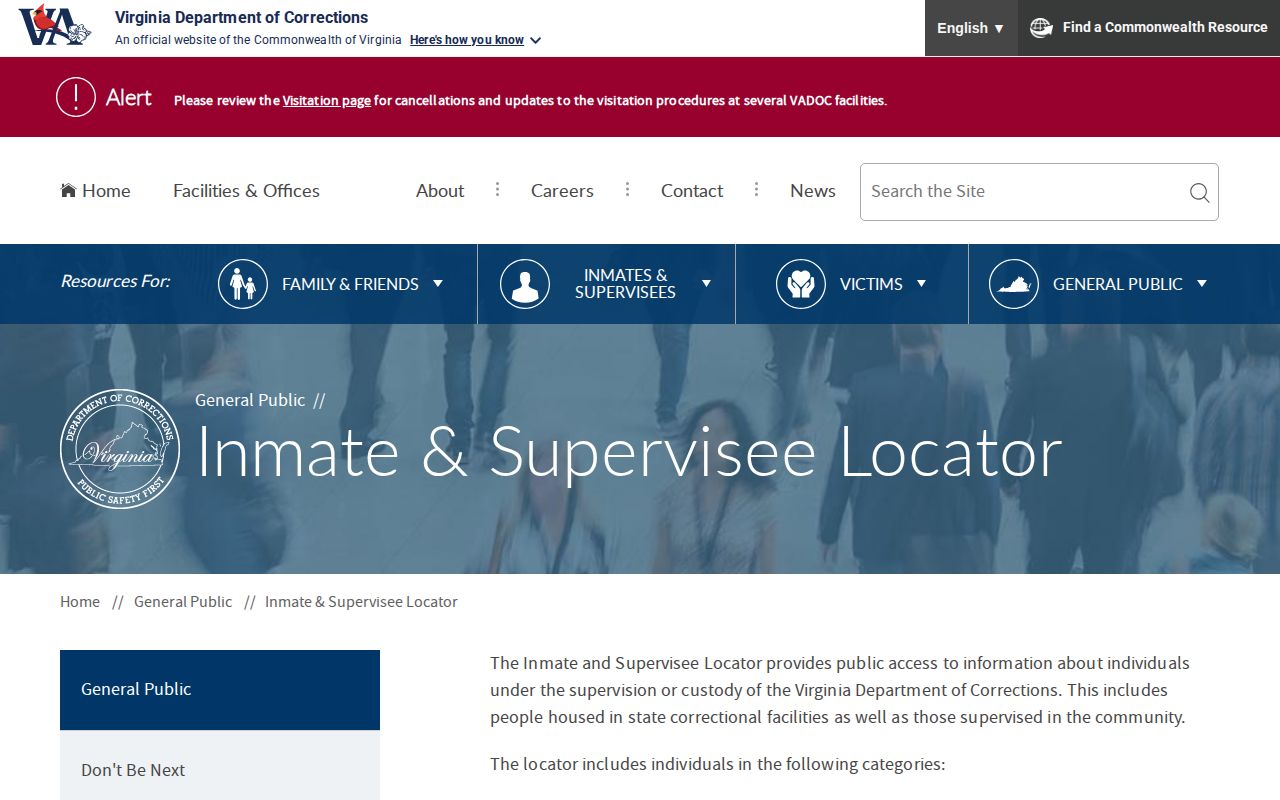
Note: A District 13 result supports a supervision connection, but it does not prove the original facility release date.
Lynchburg District 13 Supervision
VADOC Probation and Parole District 13 serves Lynchburg as well as Amherst, Campbell, and Nelson. It is a community-supervision office, not a detention site. The public directory gives an address and phone, but it does not publish office hours. Call before traveling. Reporting rules come from the assigned officer and signed conditions, not from a general web summary.
VADOC Probation and Parole District 13
2209 Florida Avenue
Lynchburg, VA 24501
434-947-6651
Hours are not posted; call first.
The office can help confirm the correct district and explain public contact procedure. It may not disclose protected case details to a caller. If a court order assigns supervision elsewhere, follow that order rather than assuming every Lynchburg case reports to District 13. Likewise, a record that names District 13 does not establish whether the person first left LADC, another BRRJA facility, or a VADOC prison.
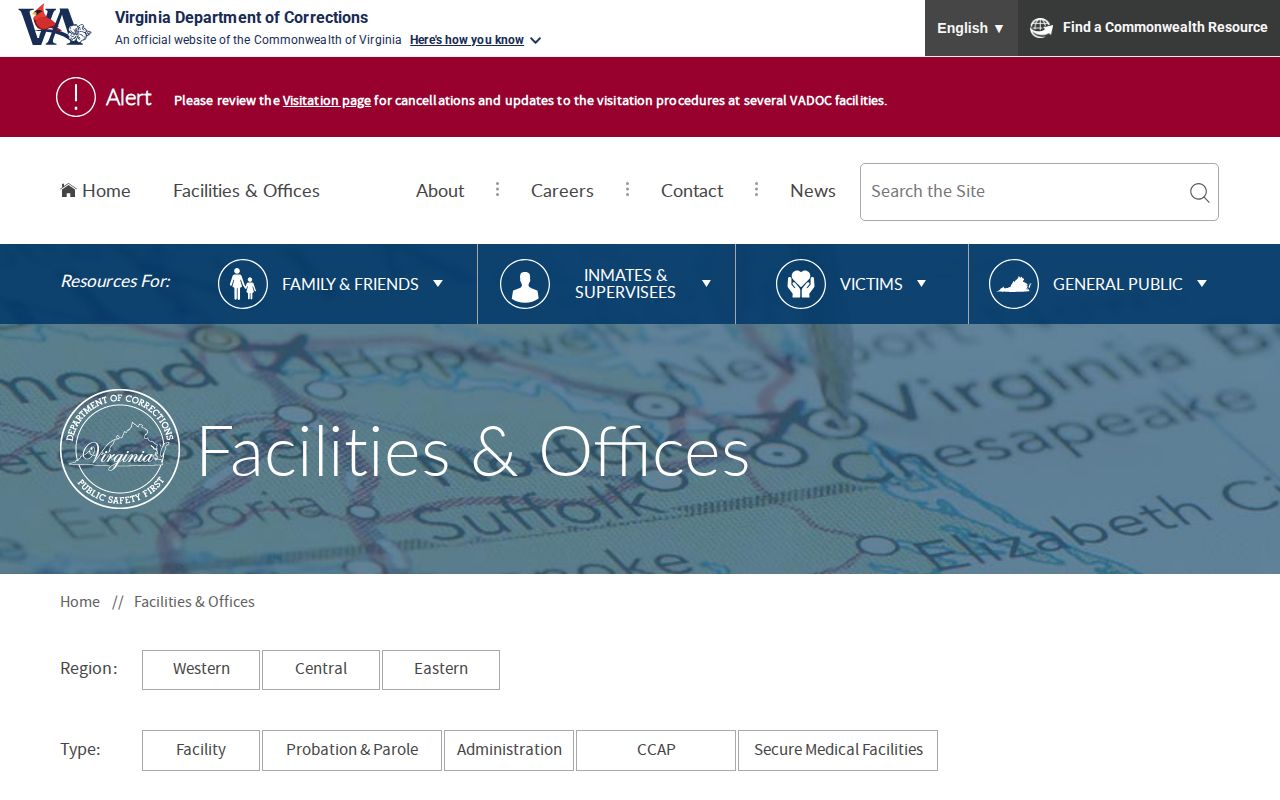
The VADOC facilities and offices directory is the source for the current District 13 listing:
Lynchburg Parole Decisions and Release
The Virginia Parole Board reviews eligible cases and may grant, deny, or defer parole. Its monthly parole reports publish decisions by year and month. They are not a live pending-case tracker. Virginia generally abolished discretionary parole for felonies committed on or after January 1, 1995, but the law has specific exception groups. Eligibility depends on the governing offense date, sentence, and statute, so an older broad claim about parole can be wrong.
A grant does not mean the person has physically left prison. Planning, required notices, records review, sentence checks, and a final release date still follow. VADOC reviews warrants, detainers, uncalculated sentences, and orders that require continued custody. The Board decision proves the decision. The VADOC release record proves the later departure. A projected date proves only the current estimate.
Virginia Code § 53.1-151 describes eligibility calculations for parole-eligible sentences, while § 53.1-165.1 states the general abolition rule and its exceptions. These statutes help identify the correct process. They do not replace the signed release papers.
Lynchburg Supervision Warrants
An absconder is a supervisee alleged to have stopped reporting or otherwise left supervision without authorization. No public District 13 absconder list was found in the official sources reviewed. VADOC has a statewide Most Wanted channel, but absence from that public page does not prove there is no violation, warrant, or officer action. Public web visibility and legal status are different questions.
Virginia Code § 53.1-162 permits a probation or parole officer to arrest an alleged parole violator without a warrant or to authorize another officer through a written statement, with the required database entry. A reported violation can result in investigation, a hearing, changed conditions, or return to custody, depending on the authority involved. Confirm current status through District 13, the proper court, or law-enforcement records. Do not treat a stale locator entry as a warrant check.
Note: A missing wanted-page entry is not proof that Lynchburg supervision remains in good standing.
Lynchburg Reentry After Release
VADOC publishes a District 13 resource directory for local reentry navigation. It identifies local contacts, 211 Virginia, and a Blue Ridge/Lynchburg reentry council. The documented council meeting is on the first Wednesday, but the location can vary. Confirm the place before traveling. A resource contact can help a person navigate services, yet council use does not prove release or supervision status.
This local layer matters because a corrections locator answers only part of the question. The person’s signed conditions identify legal duties. District 13 handles supervision. The resource directory points toward community support. These records and services should not be collapsed into one source. When the goal is to verify release, use the release papers. When the goal is current reporting information, call District 13. When the goal is service navigation, use the directory or 211.
Lynchburg Release Papers and Property
VADOC’s facility-release process provides a direct personal proof channel. At state-facility release, staff return personal property, collect state-issued inmate clothing, and may provide discharge clothing when needed. The person receives the applicable Order of Release and, where relevant, Conditions of Probation or Conditions of Parole. The released person and staff witness sign and date the applicable documents.
Those papers distinguish parole from full discharge and probation from mere physical release. They can also resolve a locator result that lacks the original exit time. This procedure applies to VADOC state-facility release. BRRJA has not published the same property-return rule for LADC, so it must not be imported into Lynchburg jail guidance. For a local jail departure, request the BRRJA booking and release transaction instead.
How Lynchburg Supervision Ends
Release from a building and discharge from supervision are separate events. Parole or probation continues until the proper authority ends it, the term expires under the controlling order, or the status changes through a court or agency process. A person can be out of prison yet still have active conditions. The best record is the final court or VADOC document that states the supervision outcome.
If the public locator no longer returns a fully discharged person, use VADOC’s records process. Form 17 is titled Request for Inactive Inmate or CCAP Probationer/Parolee Records. Form 14 supports consent where required. Correctional and supervision files can contain exempt material, so a request may yield only the releasable parts. Ask for the precise discharge document or inactive record rather than demanding a new summary.
For a date that still appears as projected, consult the Lynchburg inmate release date explanation. A projected date is not a completed release, and neither that field nor a parole grant proves the end of supervision.