
Federal Prison Release Destinations
A BOP release result marks the end of Bureau custody. The person may enter the community, begin or continue federal supervised release, transfer to state custody, enter ICE custody, or remain involved with another legal custodian. Supervised release is a court-imposed period after imprisonment and is not BOP incarceration. A BOP result alone does not state that all restraints or cases ended.
No BOP institution is listed in Lynchburg. Federal defendants can appear in local or regional jail space because the U.S. Marshals Service contracts with state and local governments. A disappearance from LADC or another contracted jail can mean delivery to BOP, a court-ordered release, or another movement. The building does not determine the legal custodian.
Confirm a Federal Prison Release
The official BOP Inmate Locator accepts a federal register number or identity details. A number is the strongest match. Name results should be compared with age, race, sex, location, and release date because common names can return more than one person.
- Search by register number when it is known.
- Otherwise use the full name and available identity fields.
- Open the exact result and read the location or status with the release date.
- Compare the register number and case identity with the federal docket.
- If another custodian is supported, check that system before describing community release.
The official BOP search interface shows the federal lookup route.
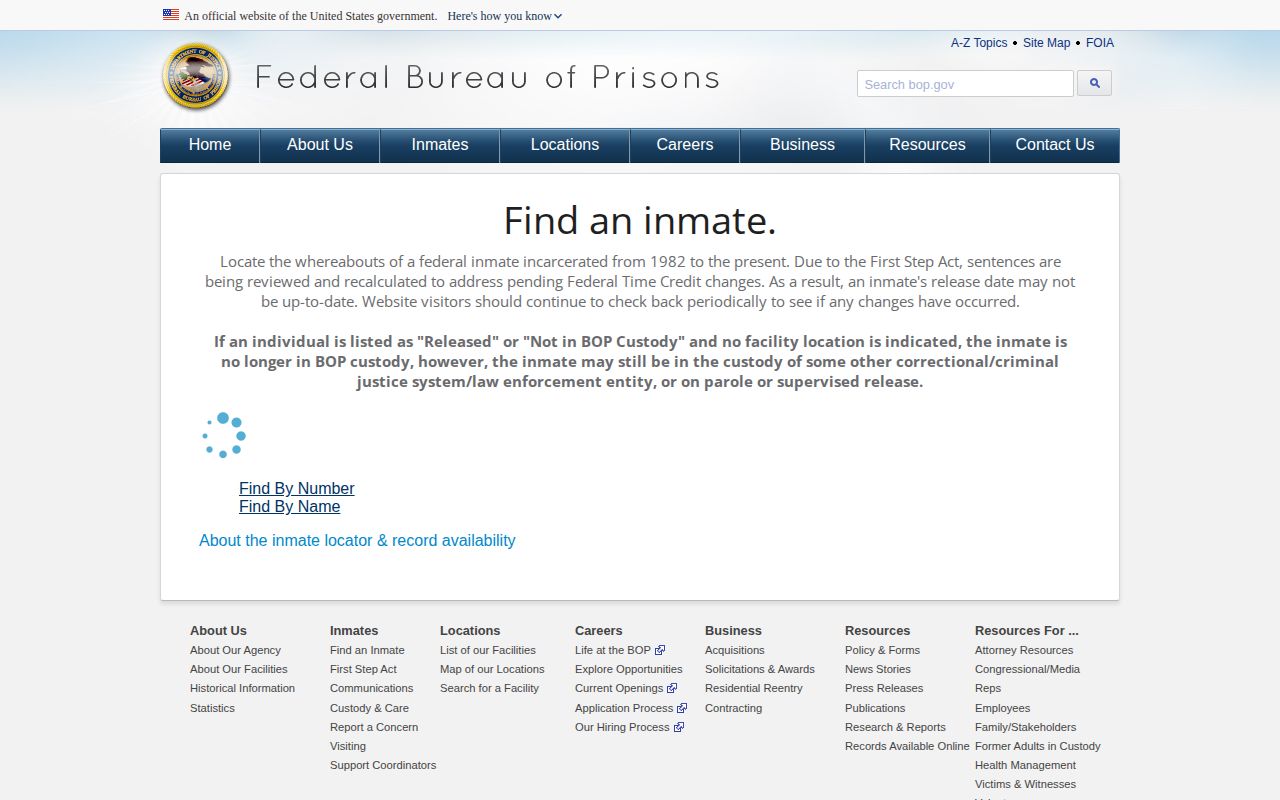
The locator searches federal Bureau records nationwide, which is essential because there is no Lynchburg BOP institution.
BOP states that its principal public coverage begins in 1982. Older federal custody research may require National Archives records. Locator extracts update daily, but recalculations can create temporary date lag.
Federal Release Status Fields
BOP results can display name, register number, age, race, sex, release date, and location. A past release date with no facility, or a status such as Released or Not in BOP Custody, means the person is no longer held by BOP. It does not exclude custody by USMS, a state, a local jail, or ICE. Nor does it end federal supervised release ordered by the court.
| BOP display | Careful interpretation |
|---|---|
| Past date and no facility | BOP custody has ended. |
| Released | The person left BOP custody, but another status may continue. |
| Not in BOP Custody | The Bureau is not the current custodian. |
| Future date | The date is projected, not a completed release. |
| IN TRANSIT | Movement is underway; it is not release. |
| UNKNOWN | The term or date has not been determined. |
The BOP record-interpretation page explains these result limits.
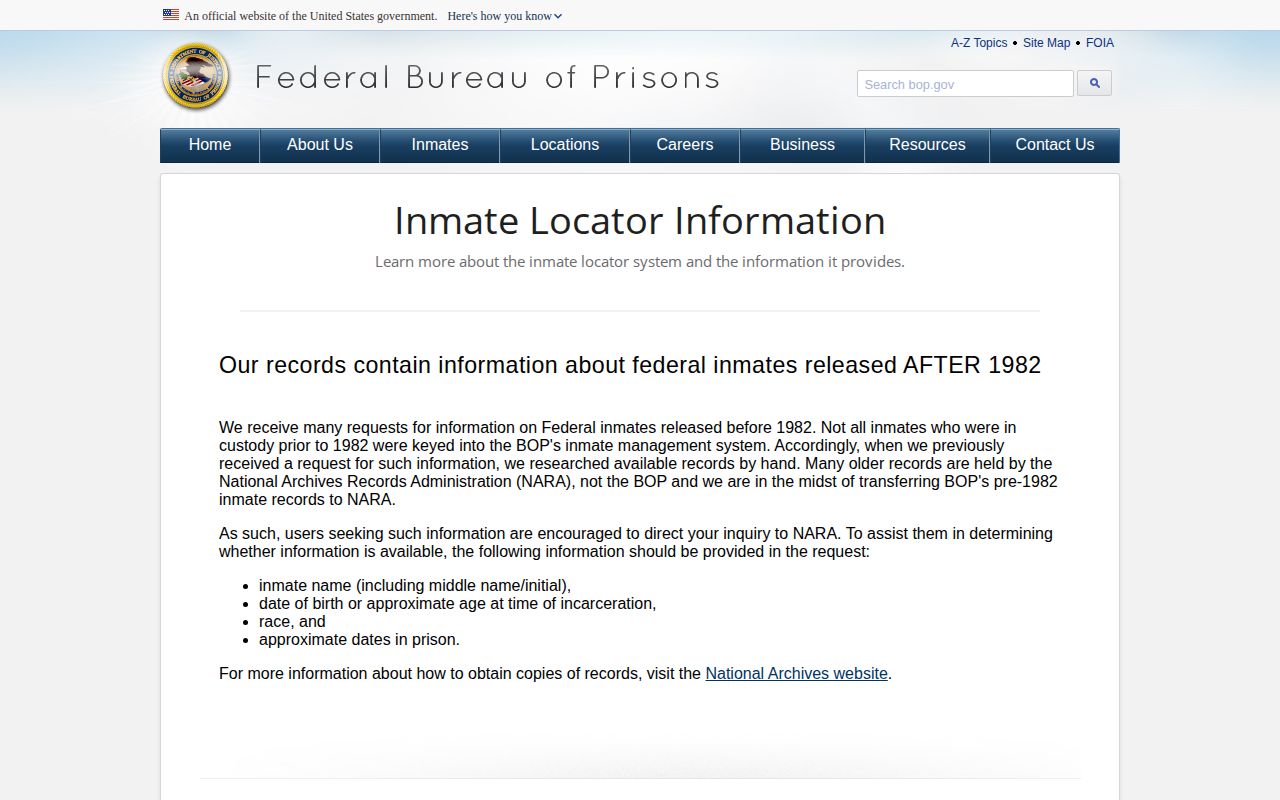
The source supports a precise statement about Bureau custody while warning against broader conclusions about all custody or supervision.
USMS Lynchburg Custody Transitions
The U.S. Marshals Service holds federal prisoners from court-ordered custody until release or acquittal, or until delivery to BOP after sentencing. It has no public name locator comparable to BOP. A federal defendant may therefore be physically housed in contracted BRRJA space while remaining under federal legal authority.
Read the federal docket first. Determine whether the court ordered detention, release, acquittal, dismissal, or commitment after sentencing. If the person was sentenced and delivered to the Bureau, search BOP. If the matter remained pretrial and no public docket entry resolves the departure, make a focused USMS FOIA request for the custody or disposition record.
Use the specific federal case, date range, full identity, and known detention site.
USMS Freedom of Information Act
Ask for an existing record rather than a new narrative. The register number, federal case number, and exact dates narrow the request.
Lynchburg Federal Release Supervision
Federal supervised release is imposed by the sentencing court and follows imprisonment. BOP's past release date does not say that supervised release ended. Review the judgment and later docket entries for the term and any modification or revocation. A probation office record may lawfully limit person-specific detail, so the public court order is often the clearest starting document.
A BOP date can also differ from a court event date without conflict. The court may sentence or order release before the physical custody transition appears in the Bureau extract. First Step Act recalculations can cause temporary locator lag. Preserve the register number and docket number so the records can be matched.
- BOP custody
- Physical custody administered by the Bureau of Prisons.
- USMS custody
- Federal custody often used before trial or before BOP designation.
- Supervised release
- Court-ordered community oversight after imprisonment.
- Detainer
- Another agency's request concerning custody or notice.
ICE After Federal Prison Release
An ICE detainer can turn the end of BOP or local custody into a transfer rather than community entry. ICE describes detainers as requests for notice and continued holding for up to 48 hours beyond the time a person would otherwise be released so ICE can assume custody. The receiving immigration record must be checked separately.
ICE ODLS is not a permanent federal release archive. Its official scope includes current detainees and, according to the agency's attorney resource, people released from ICE within the last 60 days. No result can be caused by timing, exact-match problems, or exclusions. It does not reverse a valid BOP result; the two systems answer different custody questions.
Note: A person can be released from BOP while immediately remaining in federal civil immigration custody.
No Lynchburg Federal Prison
A prosecution in the Western District of Virginia does not create a Lynchburg federal prison. BOP designations may be elsewhere in Virginia or outside the state. USMS may use contracted local space before trial or designation. Search by identity and legal custodian rather than by geography.
This distinction also prevents a BRRJA disappearance from being mislabeled. The Lynchburg release record workflow can identify the local transaction, while the federal docket, BOP locator, or USMS record establishes the federal phase.
Lynchburg Federal Release Records
Build a federal custody timeline from records that answer separate questions. The district-court docket shows detention, release, dismissal, acquittal, sentencing, and later supervision action. A USMS record can cover pretrial custody or movement before BOP designation. The BOP locator covers Bureau imprisonment and its public release-date result. A later state or ICE result establishes a receiving custodian when supported.
Start with the federal case number and register number. Compare the full name, birth details, sentencing court, and date range. A past BOP release date should not be forced to match the day a judge entered judgment or the day USMS moved the person. Administrative transfer and data extraction can create different valid dates. Each should be labeled for the event it actually records.
When the locator says IN TRANSIT, the person is moving within federal custody and has not been released. UNKNOWN means the term or date has not been determined. A future date is projected. Only a past date with the Bureau's released interpretation supports the end of BOP custody, and even then the docket must be checked for supervised release or later revocation.
BOP says First Step Act recalculations can temporarily affect displayed dates. Save the capture date and verify a major change against the current locator. Do not turn one historical screenshot into a permanent statement about custody.
After a Federal Prison Release
If a receiving system is indicated, follow it directly. A state warrant can lead to state or local custody. An immigration detainer can lead to ICE. A supervision term remains under the federal court even though BOP incarceration ended. These outcomes can all follow the same Bureau release date, so “not in BOP custody” must stay limited to the Bureau.
For a federal defendant once visible in LADC, request BRRJA's local transaction only for the physical regional-jail departure. The federal docket or USMS record explains the federal authority. BOP then documents the prison phase if the person was designated. This sequence avoids treating contracted jail space as a local sentence or a Lynchburg federal institution.
Records may also need to be read in reverse. A BOP result can identify the register number and past release date, which can then be matched to the judgment and supervision term in the docket. If no Bureau result appears, the person may have remained in USMS pretrial custody, used a different identity entry, fallen outside the main public coverage period, or never entered BOP custody. Resolve that uncertainty with the docket and a focused agency request rather than declaring release from federal prison.