
Understanding Lynchburg Release Records
Lynchburg is an independent city, not a county. Its adult jail is the Lynchburg Adult Detention Center, or LADC, and the Blue Ridge Regional Jail Authority operates it. That distinction controls where a release record should be requested. The Lynchburg Sheriff handles court, civil process, and inmate transport work, but BRRJA is the likely custodian of the jail admission, placement, movement, and release transaction. A city or police record can document an arrest. It does not replace the jail record that states when BRRJA stopped holding the person.
“Released” describes the end of one custodian’s hold. It does not always mean the person entered the community. The person could leave on bond, recognizance, time served, dismissal, sentence completion, parole, or probation. A transfer to another BRRJA center, VADOC, federal authorities, or ICE also ends the LADC stay. The release record must be read with its type and destination. A roster disappearance alone cannot distinguish those paths.
- Discharge
- The custodial part of a sentence ends, though other duties may remain.
- Time served
- The court credits time already spent in custody toward the sentence.
- Parole
- An eligible person serves the rest of a sentence in the community under conditions.
- Probation
- Court-ordered community supervision that may replace or follow confinement.
Lynchburg Release Types Explained
The legal reason and the physical movement are separate facts. A bond order may authorize departure while staff still check other warrants and holds. A dismissal can end one charge while another case keeps the person confined. Likewise, a transfer ends the stay at LADC without ending incarceration. Use the court order to learn why release became lawful and the BRRJA transaction to learn what actually happened at the jail.
| Release type | Meaning | Best next check |
|---|---|---|
| Bond or recognizance | Pretrial detention ends under court terms; the case remains open. | Court case and BRRJA release time |
| Time served | The court credits the custodial period already served. | Sentencing order and release transaction |
| Dismissal or acquittal | The case outcome favors release, subject to other holds. | Final order plus destination field |
| Sentence completion | The controlling custodial term ends. | Discharge papers and supervision status |
| Parole or probation | Physical custody may end while conditions continue. | VADOC locator and District 13 |
| Transfer or pickup | Another agency becomes custodian. | Receiving system or agency record |
Fields in Lynchburg Release Records
A focused request seeks existing fields instead of asking BRRJA to create a new report. Full name, booking or jacket number, and booking date tie the departure to the correct admission. Charges and case numbers connect the transaction to court authority. Release date and time establish when the facility’s custody ended. The release type, transfer destination, or receiving authority tells whether the event was community release or movement into another system.
| Field | What it establishes |
|---|---|
| Name and identifiers | The correct person and booking episode |
| Booking or jacket number | The authority’s internal record link |
| Booking date and facility | Start and place of the tracked stay |
| Charges and case numbers | Connections to court files and orders |
| Release date and time | The recorded end of that facility’s custody |
| Type or disposition | Bond, time served, discharge, transfer, or other event |
| Destination or authority | Community departure or continued custody elsewhere |
The record may also include the arresting agency, bond information, facility movements, and a qualifying adult initial-intake booking photograph. BRRJA does not publish a verified retention period for released entries in JailTracker. A requested agency record and the court file are more durable than a changing live search.
Requesting Lynchburg Release Records
Virginia FOIA generally lets Virginia citizens and qualifying media representatives request existing public records. The request can be oral, but writing reduces doubt about the person, booking, dates, and fields. BRRJA need not answer a broad question or create a custom list. Ask for the existing booking and release transaction, release document, and destination information. Electronic copies can reduce duplication cost.
- Gather the full name, booking date, case number, and any jacket identifier.
- Send the request to the BRRJA FOIA officer, since BRRJA operates LADC.
- List the existing release date, time, type, destination, and receiving authority fields.
- Ask for an advance estimate and state a cost limit before work begins.
- Compare the response with the court order and receiving-custodian record.
Patricia Stevens
510 Ninth Street, Lynchburg, VA 24504
434-847-3100 ext. 1224
foiarequest@brrja.state.va.us
The usual response framework is five working days after receipt. The authority may produce records, cite a lawful withholding, provide redacted records, state that it cannot find them, or use an allowed seven-working-day extension. Charges are actual access, search, duplication, and supply costs rather than a published flat fee. An estimate over $200 may require a deposit, pausing the response clock while it remains unpaid.
Lynchburg Release Law and Access
Virginia Code § 2.2-3704 sets the request process, fee limits, response choices, and existing-record rule. Section 2.2-3706 governs law-enforcement records. It places qualifying adult routine initial-intake booking photographs and specified nonjuvenile arrest information in a production category, subject to stated limits. It does not force BRRJA to maintain a public mugshot gallery.
Juvenile confidentiality, exemptions, and properly sealed or expunged records can restrict access. Virginia was in a sealing-law transition at the research date, with a later regime scheduled for December 1, 2026. Check current law when a request is made. A missing online entry may reflect limited scope or a legal access change, not proof that no custody event occurred.
When Does Lynchburg Jail Release?
BRRJA’s LADC pages do not state release hours, a weekend or holiday schedule, a physical exit point, a family waiting area, or a property-return procedure. Call LADC at 434-847-1300 and treat the answer as a current operational confirmation, not a standing policy.
VADOC separately says state-facility discharge or parole occurs by 11:59 p.m. on the release date, weather permitting. That state-prison rule cannot be applied to LADC. Court advisement sessions are not release times. Warrants checks, detainer review, paperwork, property return, and transport can follow an order.
Getting Home After Lynchburg Release
Lynchburg has GLTC bus service, and Kemper Street is a multimodal connection point. No official source reviewed identifies a direct release shuttle, a route at the LADC exit, or an authorized pickup zone. Check current GLTC service information and call the jail before relying on a stop or meeting place.
Transportation planning should follow confirmed release, not a court time or missing roster result. If another authority picks up the person, the destination may be another regional center, a state institution, federal custody, or ICE rather than a Lynchburg street exit.
Search for Lynchburg Released Inmates
Begin with the last known legal custodian. For an adult Lynchburg booking, use the official LADC page and its Lynchburg-specific JailTracker link. Save any jacket number, booking date, case number, and facility name. If the person disappears, search other BRRJA facilities when a regional move is plausible. Then compare VINE, VADOC, the court case, and any supported federal or immigration channel.
- Identify whether the last custody was BRRJA, VADOC, BOP, USMS, or ICE.
- Search the official locator and record exact identifiers before the display changes.
- Check the court disposition for bond, dismissal, sentence, suspended time, or probation.
- Follow any transfer into the receiving agency’s locator or records process.
- Request the release transaction when no online view establishes the type and destination.
BRRJA does not publish a distinct rolling feed, so Released Last 24 Hours explains the same-day fallback. A projected state date is handled on the Inmate Release Date page because an estimate does not prove departure.
VADOC Search After Lynchburg Release
The VADOC Inmate and Supervisee Locator covers people presently under state custody or supervision. Its scope includes state institutions, district-supervised parolees and probationers, institutional hospitals, some people in local or regional jails under VADOC authority, and CCAP participants. VADOC says data update daily but can be inaccurate or out of date.
| Search field | How to use it |
|---|---|
| DOC ID | Enter the complete seven-digit identifier. |
| First name | Enter at least the first three letters. |
| Last name | Enter the complete surname. |
| Optional filters | Use location, race, gender, or age range to separate matches. |
A result may identify a prison, a regional jail under VADOC authority, or a supervision office. “Projected Release Date” is not a release transaction. Someone released to parole may remain searchable as a supervisee, while a fully discharged person may fall outside the current scope. For an inactive file, VADOC Form 17 is the specific records route.
The official VADOC locator form displays the search route used after a Lynchburg state transfer.
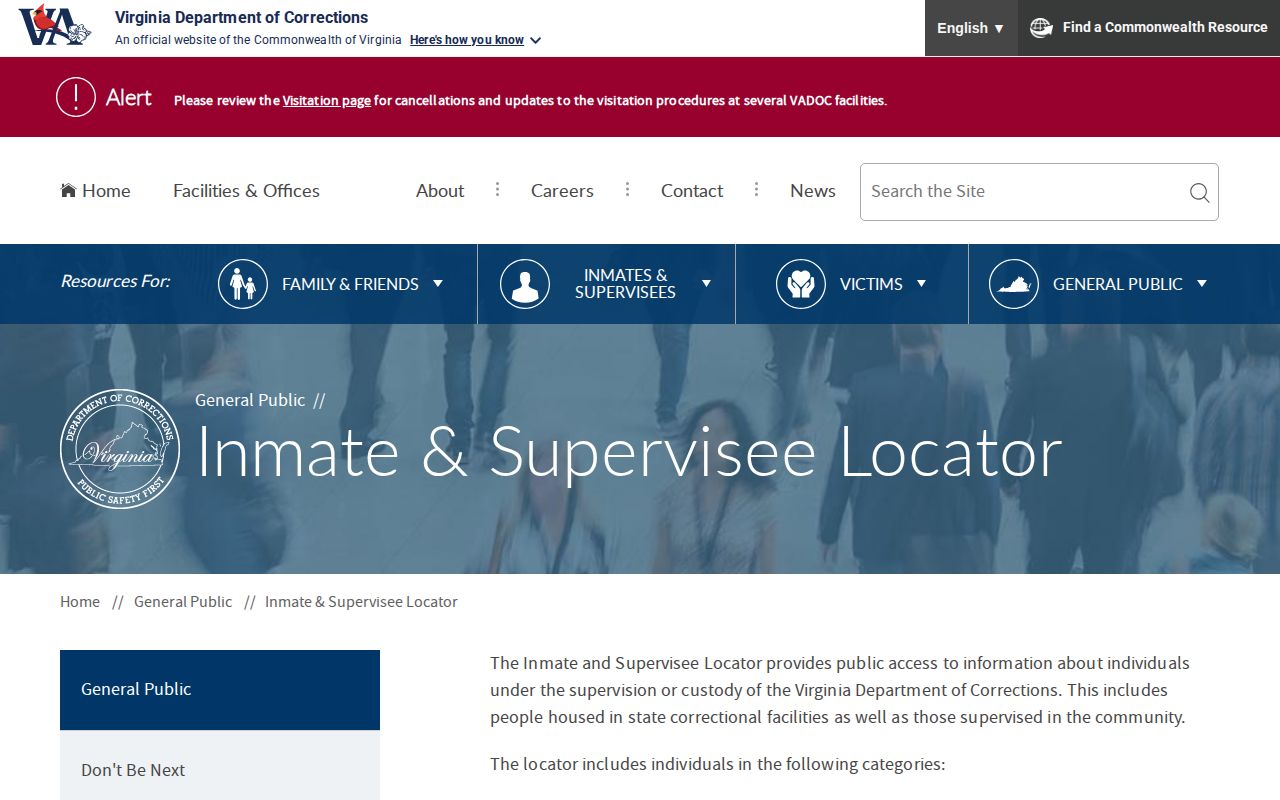
The locator is strongest for current state custody or supervision. It is not described as a permanent archive of every discharge.
Lynchburg Courts Explain Release Authority
Lynchburg requires a three-court map. General District Court handles misdemeanors and felony preliminary proceedings. Circuit Court handles felony final orders, de novo appeals, and sealing matters. Juvenile and Domestic Relations Court covers juvenile and specialized matters, with youth information confidential. A felony that looks unfinished in General District Court may have moved to Circuit Court.
The Virginia case-information hub routes searches to the proper system. Match case number, charge date, and offense, not a name alone.
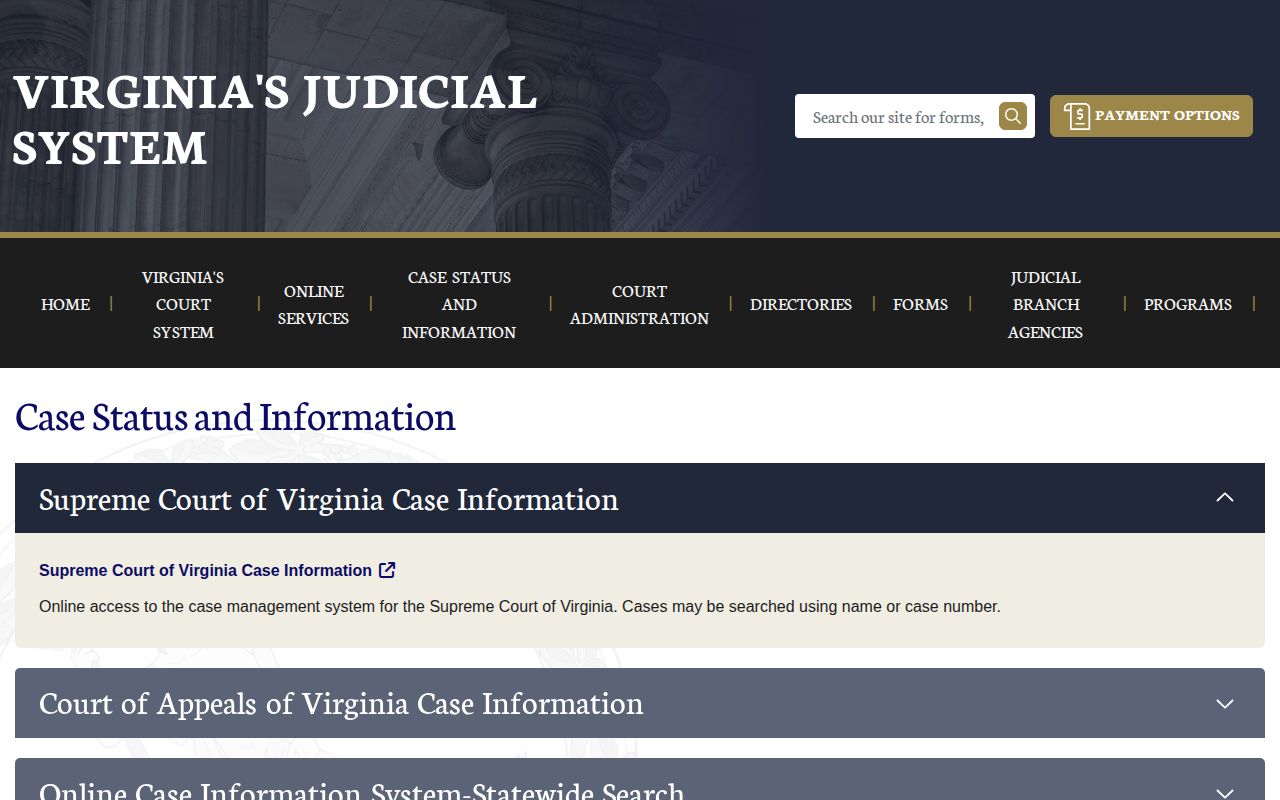
A final order may show bond, dismissal, time served, suspended time, probation, or a state sentence. It still may not show the minute BRRJA completed processing. General District custody-advisement sessions are court times, not jail release schedules.
Lynchburg Release Notices and Supervision
Virginia VINE covers all local and regional jails and provides custody checks and notices. For a Lynchburg result, confirm that LADC or another BRRJA center is the reporting facility. A VINE “release” event means the person left that jail. Official workflow warns that it can be a transfer to another jail or VADOC, so follow the next custodian.
VADOC uses NAAVI for qualifying post-sentencing victim notices. It is separate from local-jail VINE and has eligibility limits. A VINE registration does not move into NAAVI. For public status verification, use the VADOC locator. A result tied to District 13 can show state community supervision but does not establish the original LADC release time.
District 13 Reentry After Release
VADOC District 13 serves Lynchburg, Amherst, Campbell, and Nelson from 2209 Florida Avenue. The locator may connect a released state prisoner or probationer with this office. That is evidence of supervision, not proof of the date or place where custody ended. The directory lists 434-947-6651 but no hours, so call first.
VADOC publishes a District 13 resource directory and identifies a local reentry council meeting on the first Wednesday, with location subject to confirmation. The directory points to local contacts and 211 Virginia. Those resources can help after release, but participation is not proof of release.
Release Papers and Personal Property
VADOC’s process returns personal property, collects state-issued clothing, can provide discharge clothing when needed, and supplies release papers. An Order of Release, Conditions of Probation, or Conditions of Parole signed by the person and a staff witness is direct evidence of the state release type. These are VADOC rules, not published BRRJA procedures.
The VADOC facility-release page shows that document process.
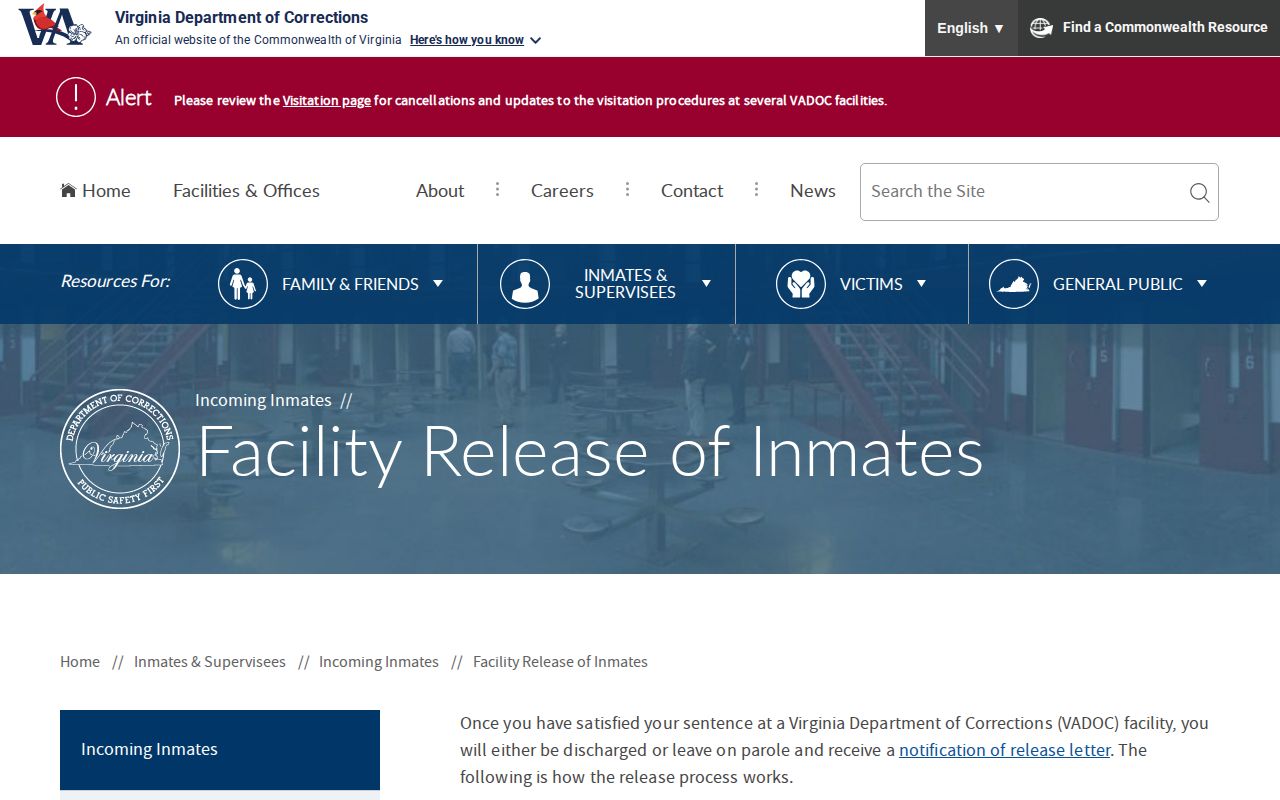
For LADC property, clothing, pickup, or exit instructions, call BRRJA because no matching public local policy was found.
Lynchburg ICE Transfer After Release
An ICE detainer asks a jail for notice and up to 48 extra hours so ICE can assume custody. A BRRJA entry may use release language when local custody ends even though the person does not enter the community. The BRRJA record should identify the destination. Then search ICE ODLS with the A-number and country of birth, or exact name and country of birth.
No ICE detention facility is listed in Lynchburg. An ICE resource says ODLS includes current detainees and releases within the last 60 days. Exact matching, timing, and exclusions mean no result is inconclusive. Older proof may require ICE records and immigration-court material.
Lynchburg Release Systems Compared
Each channel proves a different event. A strong conclusion combines sources instead of forcing one locator to answer every question.
| System | Strongest fact | Key limit |
|---|---|---|
| BRRJA record | LADC departure and destination | Live disappearance alone is unclear |
| Virginia courts | Bond, disposition, sentence, probation | No exact jail exit time |
| VADOC locator | Current state custody or supervision | Projected date is not release |
| Virginia VINE | Reporting jail custody event | Release may be transfer |
| BOP locator | End of BOP custody | Other custody may continue |
| ICE ODLS | Current or recent ICE lead | No result is not proof |
A local jail release is established through BRRJA and court records. A state-prison release may remain visible through VADOC supervision. BOP covers Bureau custody only. Current rosters are not permanent release archives.
Why Lynchburg Jail History Matters
City records say BRRJA was created in November 1994, began operating member facilities in 1998, and opened a new central Lynchburg jail in fiscal year 2000. The regional structure explains why the arresting locality, operator, building, and release destination can differ. Amherst, Bedford, Campbell, and Halifax centers are in the documented BRRJA network.
No fixed placement rule for a Lynchburg-connected detainee was found. A name leaving the Lynchburg view may reflect movement within the system. Ask for the date, time, type, and destination of the LADC custody-ending transaction.
Lynchburg Records After Sealing
Virginia’s statutory transition can change access to court and law-enforcement records. Proper sealing or expungement restricts dissemination. The judiciary has published sealing forms, while the chapter distinguishes rules before and after December 1, 2026. Check effective law and respect juvenile, sealed, and expunged-record limits.
The official Virginia State Police registry is separate and applies only to people legally required to register. It can corroborate post-custody information for a qualifying registrant, but absence says nothing about release for anyone else.
Lynchburg Release Facilities and Offices
LADC and BRRJA hold the primary local release record. Four partner adult centers can explain regional movement. Juvenile detention requires confidential youth and court channels. District 13 is a supervision office, not a jail. No VADOC prison, BOP institution, or ICE detention facility is in Lynchburg, but each wider system can become the legal custodian.
- Lynchburg Adult Detention Center, the primary adult local facility.
- Amherst County Adult Detention Center, a BRRJA partner.
- Bedford Adult Detention Center, a BRRJA partner.
- Campbell County Adult Detention Center, a BRRJA partner.
- Halifax County Adult Detention Center, a BRRJA partner.
- Lynchburg Regional Juvenile Detention Center, the separate youth system.
- VADOC Probation and Parole District 13, the local supervision office.
State, federal, and immigration paths continue through Virginia state prisons, Federal Bureau of Prisons institutions, and the ICE detention system. The legal custodian determines the correct search.